

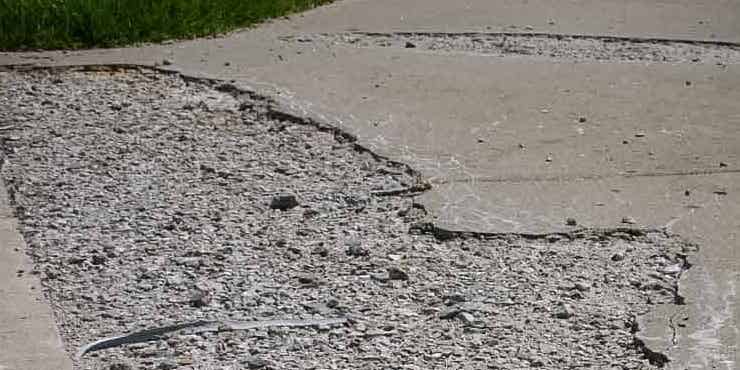
Winter poses a serious threat to exterior concrete surfaces, especially with deicing salts. While salts prevent ice buildup, they can also cause significant deterioration if you don’t protect your concrete.
Without proper protection, deicing salts penetrate the porous surface. This can lead to cracks, weakened concrete, and corrosion of internal reinforcements such as steel rebar.
This article will explore how deicing salts damage concrete and highlight effective protection methods and products.
How Deicing Salt Damages Concrete
Deicing salts, including sodium chloride, calcium chloride, and magnesium chloride, are essential for road safety during winter. However, when these salts come into contact with concrete, they introduce harmful chemicals into the material.
Concrete’s porous nature allows water and dissolved salts to easily penetrate, leading to deterioration.
Once the saltwater seeps in, it causes several problems:
- Freeze-Thaw Damage: As the water that has entered the concrete freezes and expands, it creates internal pressure. Repeating this process over multiple freeze-thaw cycles leads to cracking, spalling, and scaling, significantly weakening the concrete surface.
- Corrosion of Reinforcement Steel: In reinforced concrete structures, deicing salts accelerate corrosion of the embedded steel rebar. This occurs because the chloride ions in the salt disrupt the protective passive layer around the steel, allowing it to rust. As the steel corrodes, it expands, leading to cracks and structural damage.
- Surface Degradation: The constant exposure to deicing salts leads to scaling and flaking, where the concrete surface begins to break down, rough and uneven. Over time, this degradation can create safety hazards, reduce the lifespan of your concrete, and require costly repairs.
To avoid these risks, it’s important to take preventative steps to protect your exterior concrete before winter.
How Do You Protect Concrete from Ice Melts?
The best defense against the harmful effects of deicing salts is to apply a protective barrier. Products like Prosoco’s Saltguard and Saltguard VOC are specifically designed to safeguard concrete from the damaging effects of salt.
Both products form a barrier, preventing water and chloride ions from entering the concrete. By doing so, they significantly reduce freeze-thaw damage and corrosion risks.
Here’s how they work:
- Saltguard reacts with the lime in the concrete to form a protective barrier. This barrier prevents the penetration of waterborne salts, effectively stopping them from reaching the internal structure of the concrete. Once applied, Saltguard protects the concrete from the expansion and contraction associated with freezing water, reducing the likelihood of cracking.
- Saltguard VOC offers the same level of protection but is designed to comply with stricter volatile organic compound (VOC) regulations. This makes it a great option for projects in areas where VOC limits are a concern.
Applying these products is a straightforward process that involves cleaning the concrete surface, allowing it to dry, and then evenly applying the water repellent. It’s best to apply these protective coatings before the onset of winter so that the concrete has time to cure and develop a strong, long-lasting barrier against ice melts and deicing salts.
What Kind of Deicer Is Safe for Concrete?
Along with applying a water repellent like Saltguard, choosing the right deicer minimizes concrete damage. Some deicing salts are more harmful to concrete than others, so it’s important to select a safe product.
Here are the most common types of deicers and their impact on concrete:
- Sodium Chloride (Rock Salt): The most commonly used deicing salt, sodium chloride is cost-effective and widely available, but it’s also one of the most harmful to concrete. It can lead to accelerated freeze-thaw cycles and cause scaling and spalling.
- Calcium Chloride: This is another frequently used deicer. It works well in very low temperatures but is also aggressive on concrete, as it can lead to increased water absorption and more severe freeze-thaw damage.
- Magnesium Chloride: While often marketed as being more concrete-friendly, magnesium chloride can still cause damage. Over time, it can break down the surface of the concrete and lead to scaling.
- Potassium Chloride: Less commonly used, potassium chloride is generally considered safer for concrete but is not as effective at lower temperatures.
- Urea-based Deicers: These deicers are less corrosive and are gentler on concrete, but they are not as effective at melting ice and may still contribute to surface damage over time.
The safest approach to protecting concrete from deicing salts is to avoid the use of rock salt and other chloride-based deicers where possible. If ice melts are necessary, choosing a concrete-safe product is essential. Look for deicers that specifically state they are safe for concrete or contain less corrosive compounds such as urea.
In combination with using a protective sealant like Saltguard, you can effectively minimize damage from ice melts.
Plan Ahead: Protect Your Concrete Before Winter
Proactive protection is key to preventing deicing salt damage. Applying Saltguard or Saltguard VOC before winter gives your concrete the strongest defense against water and chloride penetration.
Waiting until damage occurs can result in costly repairs and may require complete replacement of concrete surfaces. Treating your exterior concrete with the right protective coating allows you to extend its lifespan and avoid the costly consequences of salt-induced damage.
Investing in concrete protection now will save you from dealing with cracking, scaling, and internal corrosion later. Winter may be coming, but with the right preparations, your concrete surfaces will be ready to withstand the season’s challenges.