

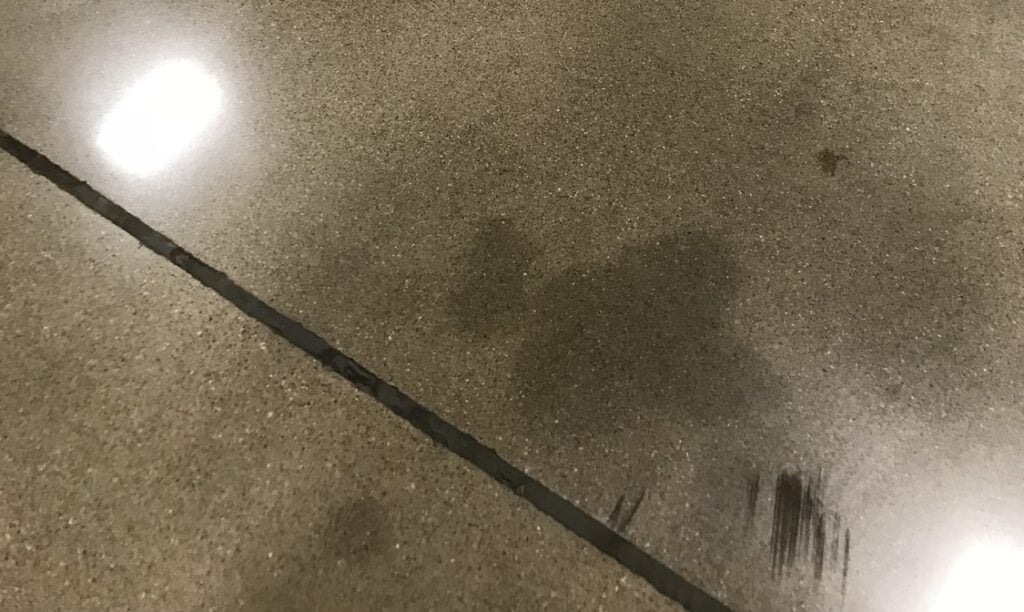
Left untreated, oil spills can leave behind discoloration and stain your otherwise beautiful floor. This is especially true for liquids like hydraulic fluid. Not only do these substances stain, but they can degrade the structural integrity of unprotected concrete over time.
In the case of our warehouse, hydraulic fluid leaked onto our floor as we were unloading a power trowel off a pallet. Swift action is needed when addressing oil spills because concrete’s porous nature can quickly absorb fluids, making remediation more challenging.
Our team was extremely responsive in identifying and stopping the leak. Luckily, we were quick to remediate the situation and document (with pictures) the entire process.
How We Removed Hydraulic Fluid from Concrete
In our warehouse, we removed as much of the fluid as possible using clean, dry cloths. Remember that polished concrete is not a coating and will absorb the oil, so it’s important to clean it as soon as possible.
Using mops, auto scrubbers, etc., at this point will only help the fluid penetrate deeper into the concrete. If the concrete is untreated or has a rough surface, a granular absorbent material like diatomaceous earth or sawdust can help draw out the oil.
When it dried, we simply swept up the powdered remains and auto-scrubbed the floor as a part of our daily maintenance routine.
Once we had removed as much fluid as possible, it was time to use a product specifically for oil and stain removal.
What Is the Best Cleaner for Oil on Concrete?
When you select a cleaner for oil spills on concrete, the best option is a degreaser or oil-specific stain remover. These products are formulated to break down oils and extract them from porous surfaces.
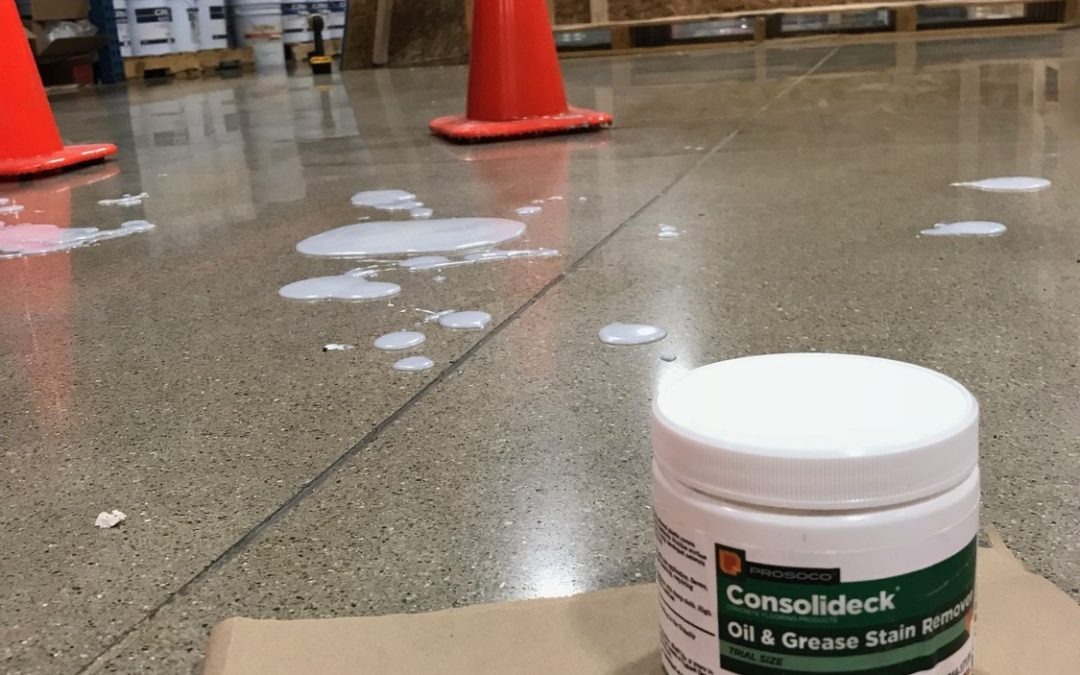
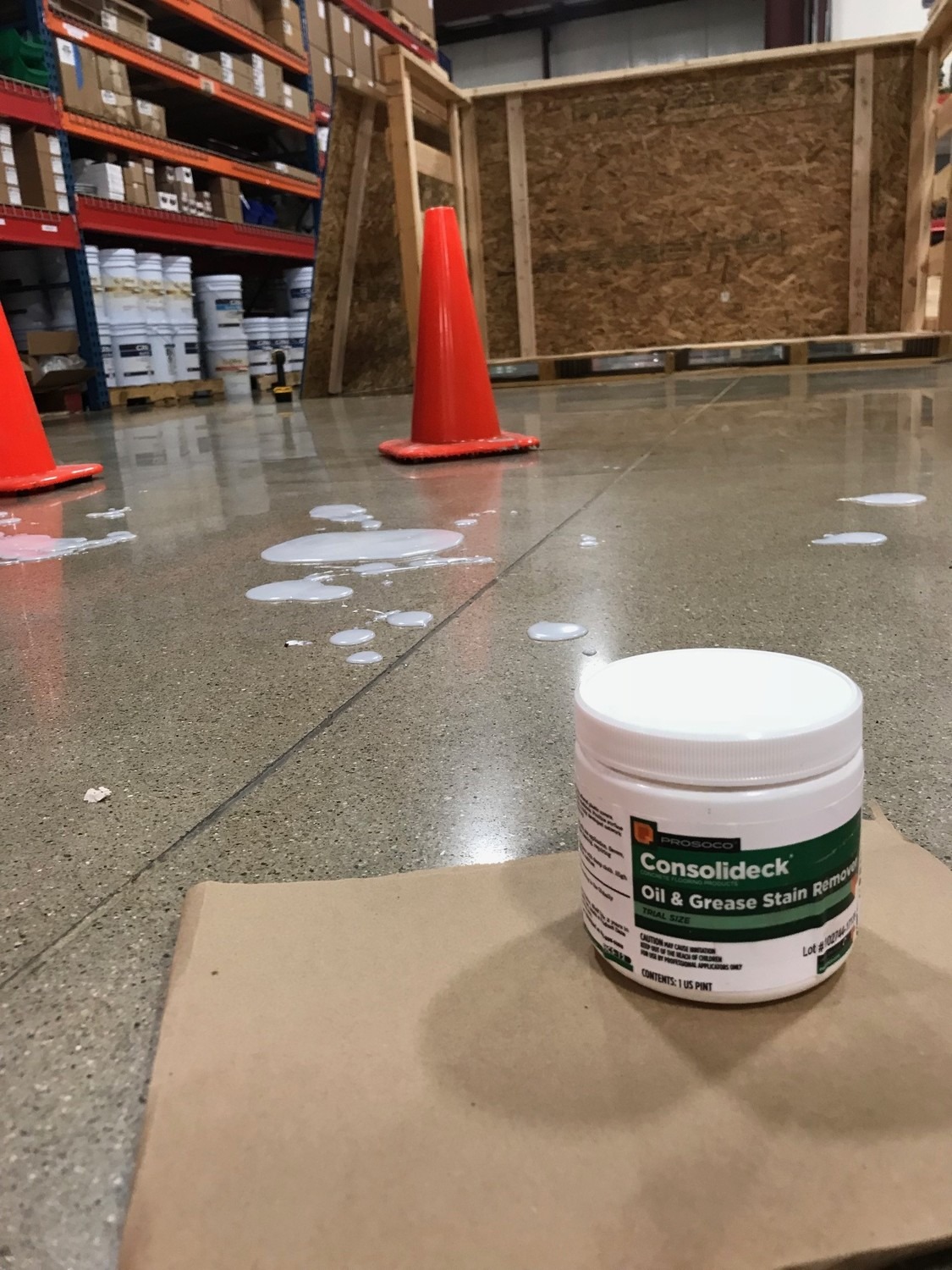
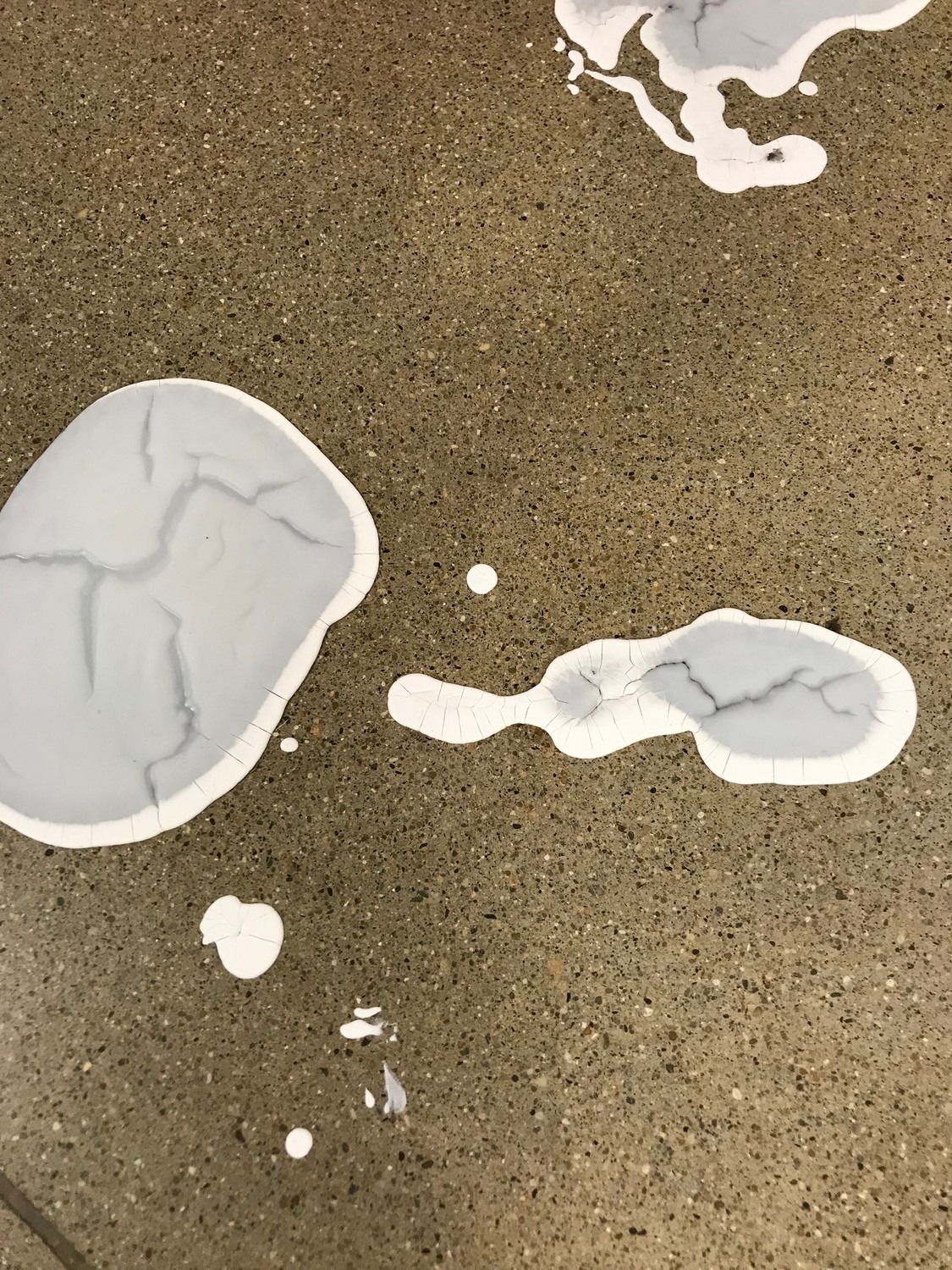
In our case, we used Prosoco Oil & Grease Stain Remover, which is highly effective for polished concrete.
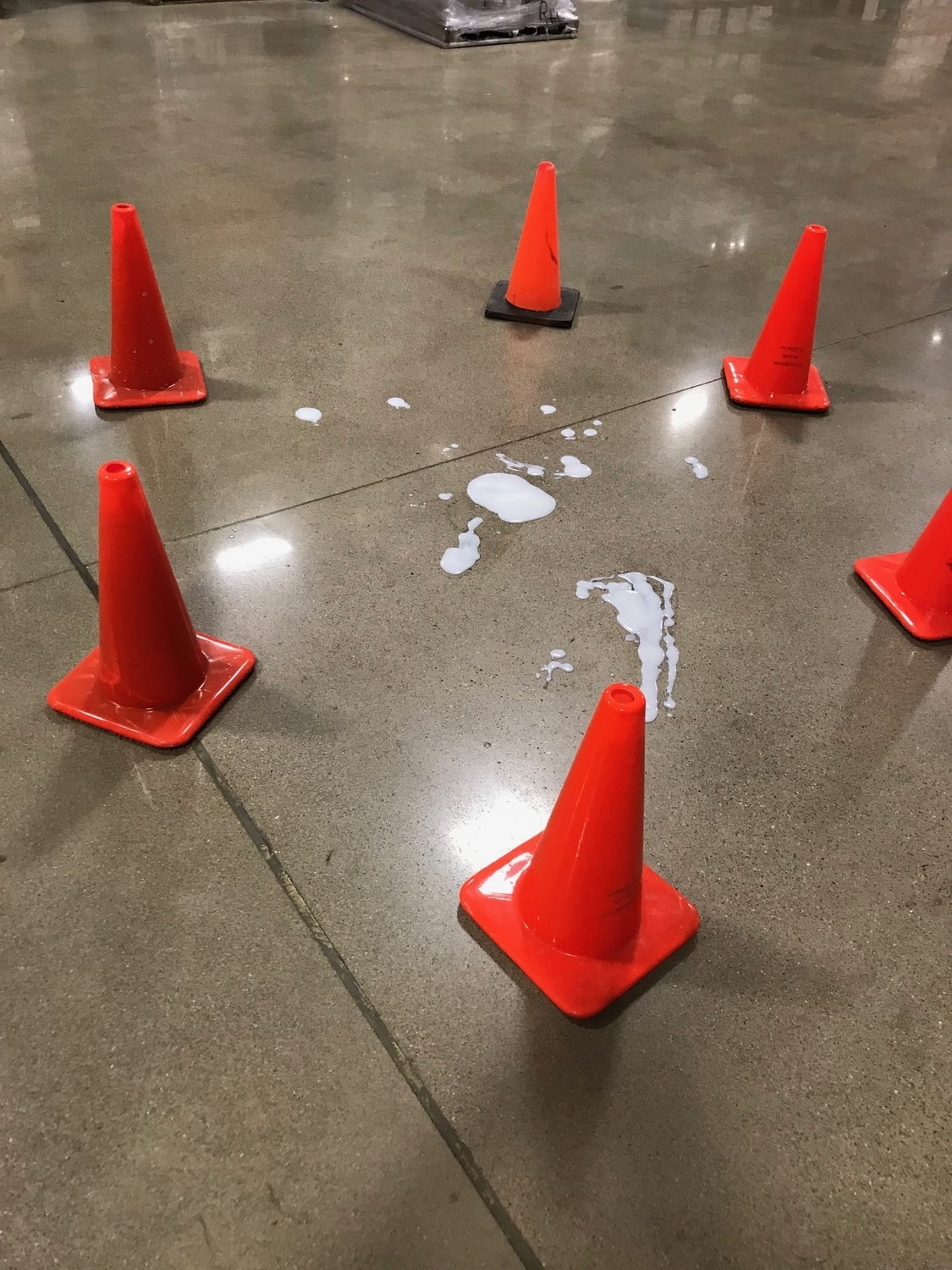
The instructions call for the glue-like substance to be poured onto the stain and left untouched to dry, which, in our case, was overnight. The product pulls the contaminants out of the substrate with a highly absorbent blend of batter-thick surfactants, solvents, and powders. I documented the process throughout the workday.
Expert Tip: Avoid using acidic cleaners on polished concrete, as they may damage the surface.
How to Clean Any Oil Spill on Concrete
The first step in cleaning oil spills on concrete is to act fast.
- Blot spill with cloth or highly absorbent materials
- Sweep up absorbent material or pick up any material leftover from the spill
- Auto scrub the floor
- Seal the floor
- Repeat as necessary
If the spill is fresh, blot up as much fluid as possible using dry cloth or absorbent materials like cat litter. Avoid using water or cleaning equipment, as these can push the oil deeper into the concrete.
After the spill is absorbed, sweep and auto-scrub the floor as usual.
Furthermore, use a high-quality sealer or densifier on the concrete to help prevent future stains from penetrating deeply. This will make cleanup easier and more effective.
If you are dealing with a particularly stubborn stain, a second cleaner application may be necessary. Additionally, non-polished concrete may benefit from pressure washing after the stain remover has done its job.
Final Thoughts
This case study highlights how quick action and the right products can preserve the integrity and appearance of polished concrete.
In all, I believe the biggest contributor to the successful removal of oil and grease stains is to address them as soon as possible. The stain faded in color but will probably require another treatment or further remediation.
We would have expected the stain to dissipate completely if the concrete had not been polished. Because of my background in concrete coatings and coating removal, I’ve been curious to compare and contrast the differences between polished concrete and coatings. This was a great case study!

Want more advice on maintaining your concrete floors? Contact us at Runyon Surface Prep for expert guidance and product recommendations.